


TEst test
4 Key points on yeast dermatitis in dogs:
1
Signs
+
It
can
affect
the
skin,
leading
to
inflamed
areas
with
sticky
discharge
and
darkened,
thickened
skin.
Malassezia
dermatitis
may
also
involve
the
paws,
claws,
or
ears,
causing
ear
infections.
2
Causes
+
It
often
develops
secondary
to
another
issue
such
as
allergies,
seborrhea,
parasites,
a
weakened
immune
system,
metabolic
diseases,
or
as
a
side
effect
of
certain
medications.
Some
dog
breeds
are
also
more
predisposed.
3
What to do
+
Consult
your
vet.
They
can
diagnose
Malassezia
dermatitis
based
on
your
dog’s
history,
clinical
signs,
and
diagnostic
tests.
4
Treatment and prevention
+
Treatment
usually
requires
topical
antiseptic
products
to
suppress
yeast
growth,
soothe
irritation,
and
repair
the
skin
barrier,
along
with
addressing
any
underlying
condition.
Yeast dermatitis is a common skin condition caused by the yeast Malassezia pachydermatis. In most animals, this yeast causes no harm. However, when the skin’s ecosystem becomes unbalanced (for example, due to allergies), this yeast can overgrow and trigger skin inflammation. Regardless of the underlying cause, yeast infection must be treated promptly to relieve discomfort while addressing its source.
What are the symptoms of yeast infection in dogs?
Go to the next page for illustration of the disorder(s)
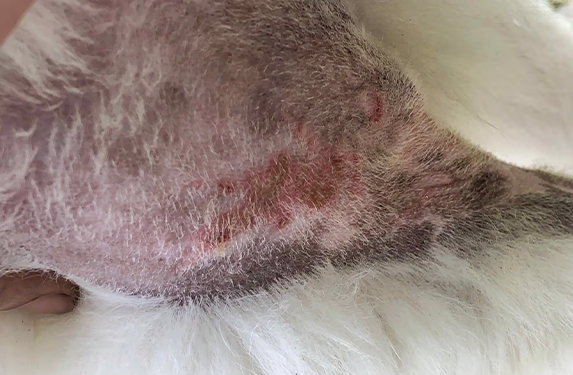
Hair loss, redness, excoriations, hyperpigmentation and mild thickening of the skin linked to Malassezia infection in a dog
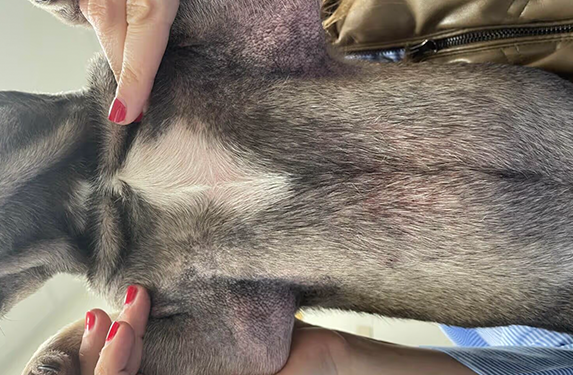
Dr Amaury Briand, Redness, thickening (lichenification) and skin hyperpigmentation in a dog. This is commonly seen notably in chronic allergies
Skin
Yeast dermatitis causes red, inflamed and itchy skin, that can feel greasy to touch and sometimes have a sticky discharge. In some cases, the skin may be crusty and flaking, with patches of hair loss. Sores can develop, and the skin may become darker and thickened, with more patchy dark areas rather than distinct spots — sometimes giving an appearance similar to elephant skin.
You may notice inflammation is worse in the skin folds around the face, the arm pits, between the toes and around the lips. The groin/inguinal areas are also commonly affected in cases of yeast dermatitis.
Ears
Malassezia can cause recurring ear infections, often with a characteristic musty odor. You may notice redness of the ear flap and canal, along with brown or yellow discharge. The ears can become painful, itchy, and warm, causing your dog to shake or scratch them frequently.

Go to the next page for illustration of the disorder(s)
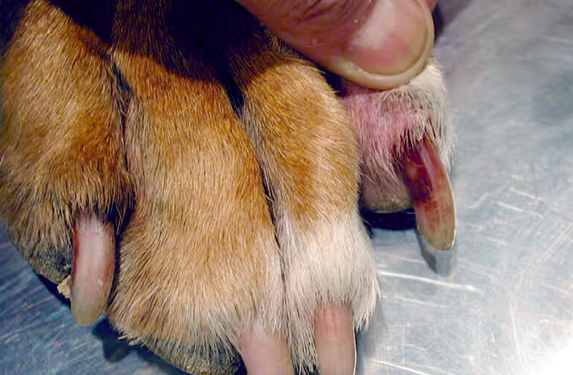
Dr Chiara Noli, Yeast dermatitis on claws. Notice the brownish aspect of the claw with skin redness
Paws
Dogs with yeast infections may have red, itchy, and irritated paws, leading them to lick or chew their feet excessively. Fur loss, discharge between the pads or around the nails, and reddish-brown discoloration of the claws are common signs.
What causes yeast dermatitis in dogs?
Malassezia, a yeast living on normal skin
Yeasts normally live on the skin and in the ear canal. Malassezia pachydermatis is usually harmless and found in low numbers. However, when the skin or ear environment is disrupted by another condition, this yeast can multiply excessively and lead to infection.
Yeast infections, secondary to another condition
Malassezia dermatitis typically occurs secondary to issues such as:
Dry or oily seborrhea
Dry or oily seborrhea
Skin parasites
Skin parasites
A weakened immune system
A weakened immune system
Certain medications
Certain medications
It isn’t contagious—your dog can’t catch it from or transmit it to another dog. It’s more common in warm, humid environments and in body areas that retain heat, such as skin folds, ears, and paws.
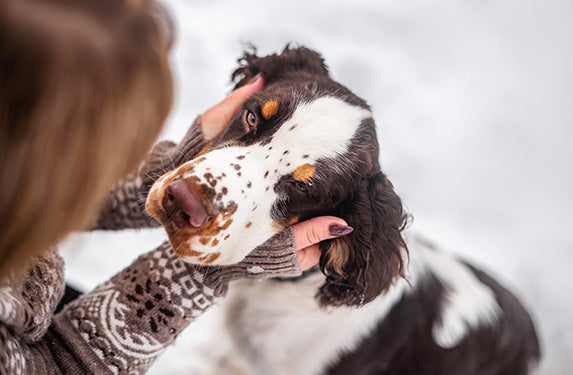
Are some breed disposed to yeast infection?
While any dog can develop yeast dermatitis, some breeds are more prone because they are predisposed to conditions that weaken the skin barrier. Dogs with thick coats, long ears, or excessive skin folds—such as Bulldogs, Poodles, Pugs, Basset Hounds, Boxers, Cocker Spaniels, West Highland White Terriers, Dachshunds, Shih Tzus, Golden Retrievers, Labrador Retrievers, and English Setters—are at higher risk.
What to do in case of suspected yeast issue?
Your vet can diagnose Malassezia dermatitis based on history, clinical signs, and tests such as an impression smear. Under the microscope, Malassezia appears as classic “boot-shaped” organisms. Sample collection methods include:
Impression smear – pressing a slide directly on the skin
Impression smear – pressing a slide directly on the skin
Tape strip – applying tape to collect surface cells
Tape strip – applying tape to collect surface cells
Cotton swab – collecting material from the ear canal
Cotton swab – collecting material from the ear canal
Further testing may be required to identify underlying causes, including blood or urine tests, allergy testing, or parasite checks. It’s also important to review any medication that may suppress the immune system, such as corticosteroids.
How is yeast imbalance in dogs treated and can it be prevented?

Treatment depends on the infection’s severity and the underlying cause. The goal is to restore normal yeast levels and reduce inflammation.
Topical products to suppress yeast growth, soothe the skin and repair the damaged skin barrier
Antiseptic products, including DOUXO® S3 PYO Shampoo and DOUXO® S3 PYO Mousse are the mainstay method of treatment. These products contain yeasticidal ingredient such as chlorhexidine* digluconate to help inhibit the overgrowth of organisms, whilst cleansing and disinfecting the skin without drying out skin. DOUXO® S3 PYO formula also contains Ophytrium®, a natural extract which strengthens the damaged skin barrier and soothes irritated areas thereby optimising the skin’s overall health.
Bathing with the shampoo is normally required at the start of treatment, followed by mousse application every 48-72 hours for three weeks, or as advised by your vet.
If the yeast infection is localized to a certain area, such as skin folds or paw pads, DOUXO® S3 PYO Pads are available to use once daily for local application.
Improvement is generally seen within one week of application but recovery is achieved after several weeks of application (generally speaking, not before 3 to 4 weeks of use).
Oral antifungal if needed
In more severe or persistent cases, oral antifungal drugs may be prescribed—sometimes alongside antibiotics if bacterial infection is present.
These treatments are typically long-term and most effective when combined with topical therapy.
Treatment of underlying conditions
It goes without saying that addressing any underlying issues is going to result in greater success of treatment. This includes treating allergies, metabolic diseases with medication, concurrent skin infections, or parasite treatment if indicated.
What is the prognosis?
The prognosis is generally good but often requires long-term management of the underlying issue. Once controlled, recurrent yeast infections are less likely. Work closely with your vet to define the most suitable plan, as treatment varies depending on disease severity and response.
How can I prevent yeast infections in my dog?
Controlling underlying allergies, if present, is an important first step in the prevention of yeast dermatitis. Working with your vet to find the best treatment plan for your dog is important, knowing that this plan usually relies on several initiatives at the same time and can evolve over the time.
Keeping your dog’s fur trimmed and clean, and ensuring they are dried properly when in contact with water will help prevent flare ups. Your vet will recommend whether and how often bathing is required.
Learn more about


Find the right product for your pet
TAKE THE QUIZ
Safe for you and your pet

Recommended by veterinarians

Approved by pets and families
Ask your vet for the best solution for your dog’s skin issues and learn more about DOUXO® S3 PYO, which provides antiseptic cleansing for bacterial or yeast skin infections. This complete care routine includes soothing shampoos, a leave-on mousse and pads.
*Chlorhexidine can cause rare but serious allergic reactions in humans. If an allergic reaction occurs, discontinue use and seek immediate medical treatment. Do not use DOUXO® S3 PYO Mousse on cats. Do not use DOUXO® S3 PYO Pads between the toes of cats.