


TEst test
4 Key points on itchy ears in dogs:
1
Signs
Itchy
ears
in
dogs
are
indicated
by
scratching,
head
shaking,
and
pawing.
Visual
signs
include
bald
patches,
redness,
scabs,
wounds,
excess
earwax,
or
discharge.
Discomfort
may
show
as
lowered
ears
and
aversion
to
head
petting.
2
Causes
A
common
cause
for
itchy
ears
is
infection,
which
can
lead
to
permanent
damage
if
not
treated
and
is
usually
secondary
to
something
else.
Other
causes
include
allergies,
foreign
bodies
and
parasites.
3
What to do
Seek
help
from
your
veterinarian
4
Treatment and prevention
Treatment
will
vary
depending
on
the
underlying
cause,
but
will
aim
to
soothe
the
ear,
treat
the
cause
and
prevent
further
irritation.
It’s
possible
to
prevent
itchy
ears
by
treating
the
underlying
cause.
Your
vet
will
be
able
to
guide
you
on
how
to
avoid
future
flare-ups.
Does your dog keep scratching its ears a lot lately? Every dog will scratch its ears every once in a while, but if this is something that you’re seeing regularly, it’s time to take your dog to the vet and investigate. As there are several problems that can cause your dog’s ears to feel itchy, it is very important to find out what is causing this and start appropriate treatment.
How can you tell if your dog has itchy ears?
Go to the next page for illustration of the disorder(s)

Dr Susanne Ahmon – Inflamed ear pinna. This is common in allergic dogs
Scratching the ears is usually the most common sign of itchy ears in dogs. However, if the ears are sore, your dog may try to find a gentler way to relieve its itchy skin, such as:
- Shaking its head,
- Rubbing its head on the floor or against objects,
- Pawing at its ears.
If you don’t see your dog scratching but suspect it may have itchy ears, have a closer look. If you find bald patches at the base of the ear, with redness, scabs and wounds, this means that your dog has been scratching. Also, if you notice redness, excess earwax, any kind of discharge, or an unpleasant odor coming from the ear, this is likely to cause itchy skin and discomfort as well.
Lowered ears and whimpering while scratching or when someone touches its ears are also signs of discomfort that can suggest an ear problem.
Painful ears often develop as a result of secondary infections, which commonly occur in dogs with itchy ears. If your dog’s ears are sore, it may avoid being touched on the head and could even react defensively if you try to pet it.
If its ears are making your dog extremely uncomfortable, he/she may show a lack of appetite, seem less interested in the surrounding environment and withdraw from social interactions with other dogs.
What causes dog's itchy ears?
There are a number of conditions that can cause itchy ears in dogs, from uncomplicated one-time infections to chronic illnesses that manifest through ear problems, the most common being:
Allergies
Allergies in dogs can be incredibly common and can cause a range of symptoms. Food allergies and atopic dermatitis often present with intense itchy skin in dogs, with the ears often affected. This usually results in ear infections.
Common signs of allergies include:
- Localized or generalized itchy skin,
- Localized or generalized itchy skin,
- Skin lesions (inflammation, wounds, scabs, infection)
- Skin lesions (inflammation, wounds, scabs, infection)
- Vomiting and diarrhea are possible in the case of food allergies but not very common,
- Vomiting and diarrhea are possible in the case of food allergies but not very common,
- Sneezing and runny eyes may be present in dogs with atopic dermatitis.
- Sneezing and runny eyes may be present in dogs with atopic dermatitis.
Even though these signs may be suggestive of allergies, diagnosing what
causes allergic disease usually takes time, patience, and a number of visits to the vet. Also, allergic dogs can suffer from more than one type of allergy, which can make the diagnostic process more challenging.
Ear infections (otitis)
Did you know that there’s a healthy population of microorganisms that live on your dog’s skin?
These bacteria and yeast are usually harmless, but if there’s something that disturbs the ear environment, such as inflammation, irritation, or scratching as the result of allergies, parasites or foreign bodies, for example, they can start to multiply without control, causing a secondary infection.
Ear infections can be very painful. As local treatment requires manipulating the ears often, with several cleanings and topical treatment applications during several days, your dog can react aggressively when you are touching their ears due to pain. This can occur even in dogs that are normally very gentle, although not all dogs with ear infections will react this way.
When treating ear infections, make sure to approach your dog with caution and keep an eye on their body language. For more tips on how to clean your dog’s ears, don’t hesitate to read our dedicated page.
Foreign bodies
A foreign body is what we call something that has entered the ear canal and that has not managed to come back out.
This type of problem is very common during spring and summer with grass seeds, for example. Due to their structure, grass seeds easily stick to your dog’s hair, and their arrow-like shape allows them to penetrate into the tissues.
If a grass seed enters the ear canal, it can cause extreme discomfort and itchy skin for your dog, who will scratch, shake their head and do whatever they can to try and remove it. It’s not likely that your dog can remove the grass seed by themselves, though, and secondary infections are likely to develop. Veterinary intervention to remove the foreign body is almost always necessary.

Go to the next page for illustration of the disorder(s)

Ear discharge in a dog linked to ear mite infestations. This causes very itchy ears.
Ear mites
Fortunately, ear mites are not very common in dogs, but they can catch them if they’ve been in contact with affected animals.
Ear mites are microscopic parasites that will settle in the ear canal. These are not usually visible to the naked eye, but they may be seen with the help of an otoscope. Your veterinarian need to examine a swab from your dog’s ear under the microscope to identify them.
An ear mite infection is extremely itchy for dogs, causing inflammation and a characteristic dark ear discharge that resembles ground coffee.
Which dogs suffer from itchy ears?
All dogs can have itchy ears, but there are some breeds that are predisposed to the underlying conditions we’ve talked about, such as:
- Allergies – e.g., Labrador and Golden Retrievers, German Shepherds, French Bulldogs and Pugs
- Allergies – e.g., Labrador and Golden Retrievers, German Shepherds, French Bulldogs and Pugs
- Ear infections (due to the shape of their ears) – e.g., Cocker Spaniels, and Basset Hounds
- Ear infections (due to the shape of their ears) – e.g., Cocker Spaniels, and Basset Hounds
- Other skin diseases that can lead to ear infections – breeds will vary depending on the disease.
- Other skin diseases that can lead to ear infections – breeds will vary depending on the disease.
What can you do if your dog’s ears are itchy?
Ear problems of any kind should be assessed by a vet to avoid evolving into more serious problems. Due to the ear’s anatomy, a simple ear infection, for example, can progress to meningitis, so you should never take ear problems lightly.
That said, if you recognize any sign of an ear problem, we recommend booking an appointment with your veterinarian.
How can itchy ears be efficiently managed and prevented?
If you find your dog constantly scratching its ears, you should schedule an appointment with your veterinarian as soon as possible.
Ear problems are usually painful, causing a negative impact on your dog’s quality of life, and can lead to permanent damage to their hearing, as well as neurologic problems, if not treated properly.
How to treat your dog’s itchy ears
Treatment is usually based on 3 key aspects, but it varies depending on what is causing the ears to itch. Always use auricular products as instructed by your veterinarian.
Ear cleaning: Ear cleaning will help remove discharge, earwax, and debris, allowing the topical products to reach the place they are needed, and reduce
inflammation.
Ear cleaning: Ear cleaning will help remove discharge, earwax, and debris, allowing the topical products to reach the place they are needed, and reduce
inflammation.
Topical ear treatment: Topical treatment usually involves putting medicine inside your dog’s ear canal. This medicine will vary depending on what’s needed to treat your dog’s ear problem. It can include antibacterial (to kill bacteria), anti-inflammatory (to reduce pain and inflammation), anti-fungal (to kill yeast) and acaricidal (to kill mites) agents.
Topical ear treatment: Topical treatment usually involves putting medicine inside your dog’s ear canal. This medicine will vary depending on what’s needed to treat your dog’s ear problem. It can include antibacterial (to kill bacteria), anti-inflammatory (to reduce pain and inflammation), anti-fungal (to kill yeast) and acaricidal (to kill mites) agents.
Treatment of the underlying cause: Treating the underlying cause is essential to prevent future ear infections.
Treatment of the underlying cause: Treating the underlying cause is essential to prevent future ear infections.
How to prevent itchy ears?
Some dogs who have itchy ears also have an underlying problem.
If your dog has a chronic condition that predisposes them to itchy ears, such as atopic dermatitis, the only way to prevent itchy ears is to have that address the underlying condition treated. If your dog has recurring ear infections, it’s vital to find the cause.
As for ear mites, your dog’s regular parasite treatments may help with that, depending on which product you’re using.
After walks, have a thorough look through your dog’s body to see if you can find any grass seeds that can get into the ear canal and remove these if you do.
Learn more about
Find the right product for your pet
TAKE THE QUIZ
Safe for you and your pet

Recommended by veterinarians

Approved by pets and families

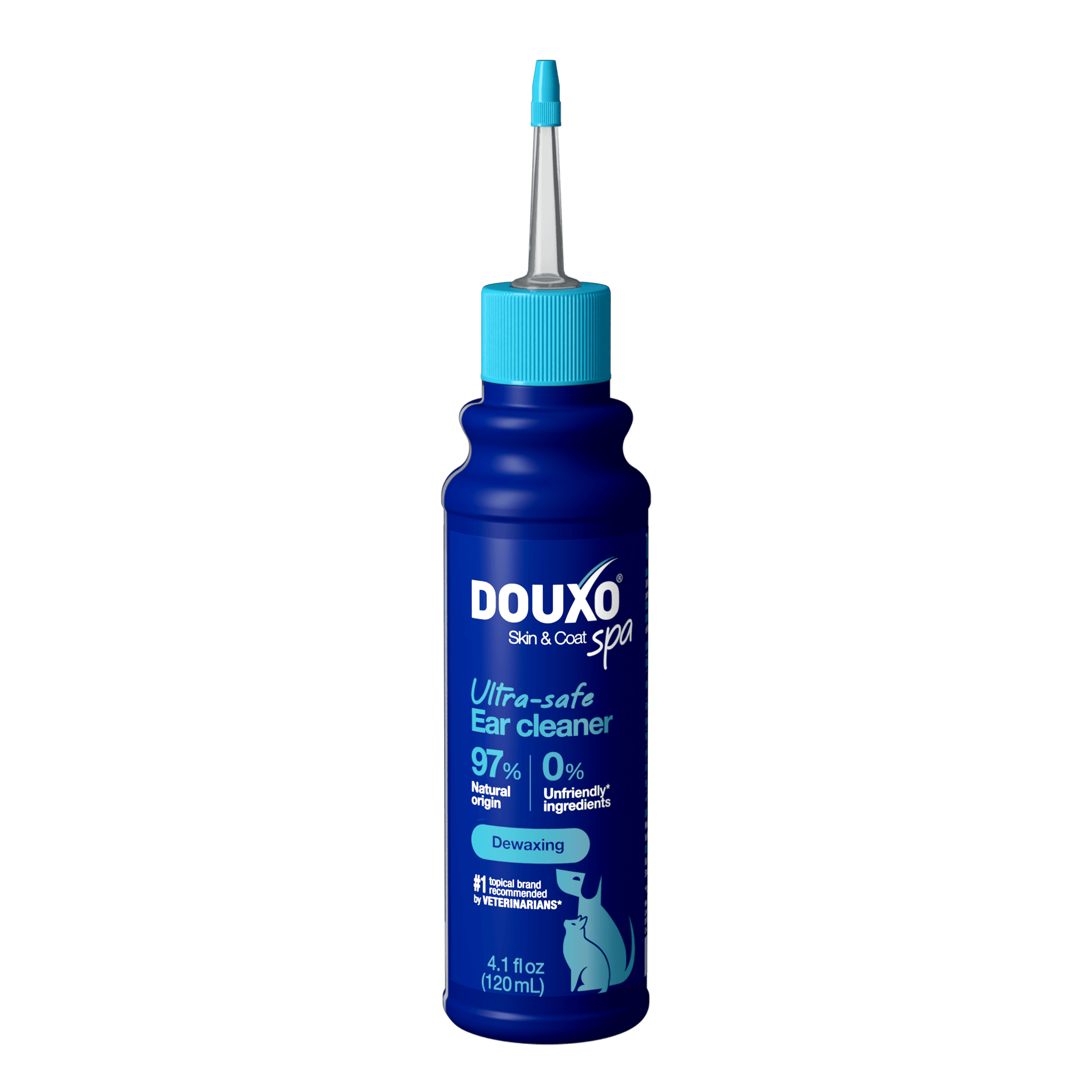
Is your dog troubled by itchy ears? Discover relief with DOUXO® S3 CARE Ear Cleaner, a vet-approved solution with high-quality ingredients designed for optimal canine and feline ear care. Tailored for all ears, including itchy ears, our high-performance dog and cat ear cleaner prioritizes safety, promoting ear health. Explore the convenience of caring for your companion's ears with a non-traumatic, non-sticky, leak-free, and comfortable solution for optimal ear care.