


TEst test
4 key points on itchiness in dogs:
1
Understanding dog itch
+
Dog
itch
severity
varies
and
can
even
affect
play
and
sleep.
Causes
include
notably
parasites,
infections,
and
allergies.
Vet
diagnosis
guides
treatment.
2
Relieving dog itching:
+
Several
strategies
exist
and
can
be
combined
with
products
to
apply
on
the
skin
and
medications.
Check
with
your
vet
for
best
treatment
recommendations.
3
Treating underlying causes:
+
Determine
the
cause
with
your
vet.
Regular
parasite
control
and
allergy
management
are
essential.
Address
secondary
infections
promptly.
4
Preventing skin damage
+
Use
physical
barriers
like
buster
collars
or
pet
shirts
to
prevent
skin
damage
during
itching.
Trim
nails
and
monitor
skin.
If your dog has itchy skin, then you know about it! Keeping you awake at night with the constant thumping of the back leg as they scratch, futilely trying to relieve the itch. It can be exhausting for both of you.
So, it is important to recognize your dog is suffering from pruritus (itchy skin) and provide itch relief as soon as possible.
Is itching serious for your dog?


It depends. It depends on the cause, of course, but also on the intensity and frequency of itch manifestations. Some dogs will present with occasional, not very intense itches, whereas others can spend their time scratching or licking, preventing them from playing and even sleeping. It can be tough on your dog—and on you. Although one of the main signs of itchy skin is, of course, scratching, relieving an itch can manifest in other ways than scratching alone. You may notice your dog:
Overgrooming, excessively licking or even biting at an area
Rubbing their body on surfaces for those hard-to-reach places
Head shaking
Scooting
The irritation can become so frustrating that they just can’t stop scratching and will often cause more serious damage. The skin can become secondarily infected because dogs tend to lick their wounds, introducing bacteria from their mouths.
Cause of itch must be investigated, as if the cause is not under control, it will reoccur, and your dog’s quality of life will be affected. The most common cause for dogs’ itch is fleas, so you can begin investigations by checking carefully your dog’s fur and checking when you gave your furry friend the last preventative flea treatment. To rule out all the causes of itchy skin, it is important to seek advice from your veterinarian. Main causes include external parasites (not only fleas), skin infections (bacterial or yeast), and allergies. Treatment will, of course, depend on the cause.
What can you put on your dog to relieve itching?
Itch is not a specific sign from one disease; many different skin conditions can lead to itch, and some, like skin infections, won’t respond very well to only soothing measures. That is why addressing the underlying cause is a major component of itch treatment. We recommend you consult your vet to identify the cause; in any case, if the signs don’t improve or worsen after a week or two after beginning a product, we prompt you to seek medical advice. That said, it is important to soothe itchy, irritated skin, and this can be achieved with products from 2 main categories: topical non-drug products and medications.
Topical solutions to ease itchy skin and strengthen the skin barrier
Topical solutions are essential to rapidly soothe itchy, sensitive, irritated skin, by bringing ingredients directly to where they are needed. Shampoos can be used to cleanse the area, removing dirt, debris and allergens. Other formulations such as mousses then play a valuable part as they are not washed off, meaning the ingredients are in contact with the skin longer for optimal performance. For the best results, it’s always good to have a three-pronged attack when dealing with the skin. Not only do we need to soothe and protect the outer layers, especially the epidermis, but we also want to nourish and strengthen the skin so it can do its job as the body’s main protector and restore the balance of the protective microbiota for a complete and healthy skin barrier ecosystem. The DOUXO® S3 CALM line of products can be valuable in helping soothe irritated skin, supporting the microbial flora for health skin and supporting skins' physical barrier for a supple hydrated skin. The line is available in shampoo and mousse for whole body application to aid with all sensitive areas.
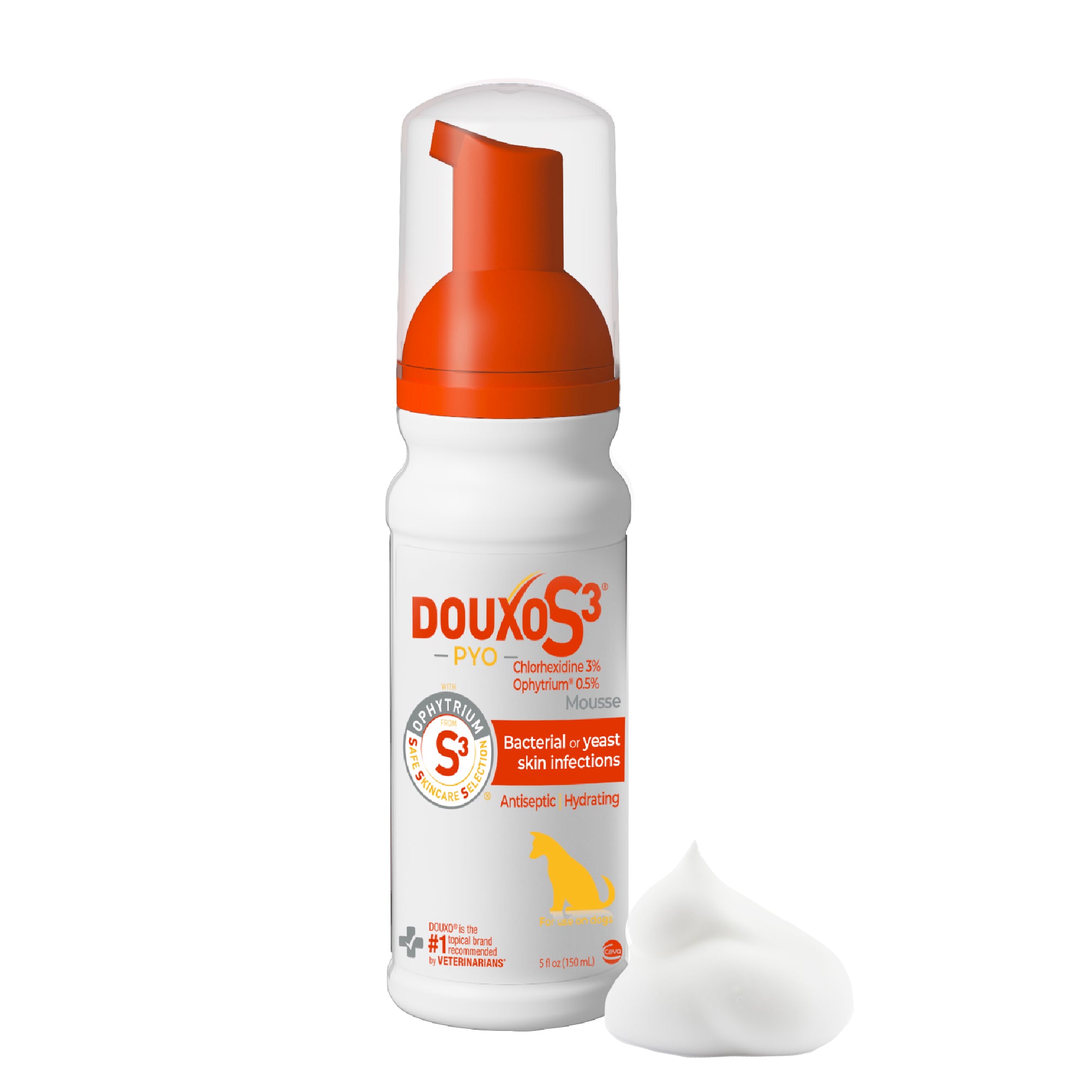
In case of skin infection, the recommendation is to use antiseptic products, as soothing products won’t allow them to eliminate the germs that cause itch.
Medications to Reduce Itching and Inflammation
Prescription medications may be required. Your vet may recommend topical, oral, or injectable treatments to provide immediate relief. Depending on the medication, it may take a few hours to a few days to be effective.
Treat the Cause for Long-Term Relief
Once the cause of your dog’s itching is diagnosed, your vet will help you build a tailored treatment plan.
Effective Parasite Control
Preventative parasite treatments are essential, especially for dogs allergic to flea bites (flea allergy dermatitis). Don’t forget to treat other pets and the environment for complete control.

Allergies
If your dog suffers from allergies, your vet will help identify the allergen(s).
There are 3 main types:
- Flea allergies
Environmental allergies (atopic dermatitis) — e.g., pollen, grass
Food allergies
For food allergies, once the ingredient is identified via an elimination diet, the dog must avoid it unless advised otherwise by a veterinarian.
For atopic dermatitis, the goal is to:
Avoid the allergen if possible
Avoid the allergen if possible
Relieve itching and inflammation
Relieve itching and inflammation
Improve the skin barrier
Improve the skin barrier
Increase immune tolerance (when needed)
Increase immune tolerance (when needed)
4 key approaches for managing allergies:
Avoid allergens when possible (e.g., dust, food, fleas)
Avoid allergens when possible (e.g., dust, food, fleas)
Use topical soothing treatments
Use topical soothing treatments
Use medications to control symptoms
Use medications to control symptoms
Modulate immune response
Modulate immune response
Allergies are lifelong. A treatment that works today may not work tomorrow. Don’t get discouraged — your vet will adjust the plan. Every dog is unique, and so is their allergic profile. Using long-term topical care is a valuable part of multi-modal allergy management.
Secondary Infections
Skin infections (bacterial or fungal) are usually secondary to another condition, that can be cutaneous or from inside the body. Treatment of skin infections rely on four key components:
Rebalance the skin microbes
Rebalance the skin microbes
Relieve the pain, itching and inflammation
Relieve the pain, itching and inflammation
Restore the skin barriers
Restore the skin barriers
Manage the underlying cause
Manage the underlying cause
Treatment of skin infections often involves antiseptic products. In cases of deeper or persistent infections, your veterinarian may prescribe oral antibiotics or antifungal medications. Topical products can help support the skin and provide soothing effects.
To help prevent recurrence of skin infections, it is important to identify and address the underlying cause. While treatment is ongoing, your veterinarian may recommend additional measures to support your dog’s comfort and overall well-being.
How to prevent further damage to the skin
Alongside treating both the inside and outside of the skin, you might find it useful to provide a physical barrier between the skin and the nails. The aim is to prevent the dog from traumatizing and further damaging the skin while still satisfying their need to scratch. This can be as simple as using a elizabethan collar to protect the ears, head and neck area if that’s the affected region. Or use a pet shirt to cover and protect the torso and stomach. Baby clothing also works well if you have any handy. Alternatively, you can protect the skin by making sure the nails are trimmed and kept smooth.
Remember to remove any coverings very frequently (at least twice a day) and check the underlying skin for redness or wetness. You can certainly make a skin condition worse if it is covered and gets wet for any reason, making the perfect environment for yeast and bacteria to take hold.
Learn more about




Find the right product for your pet
TAKE THE QUIZ
Safe for you and your pet

Recommended by veterinarians

Approved by pets and families

Is your dog scratching or biting itself? He may be suffering from itchy skin!
Ask your vet for the best solution for your dog’s skin issues and learn more about DOUXO® S3 CALM, which helps soothe itchy, irritated, or allergic skin, and DOUXO® S3 PYO, which provides antiseptic cleansing for bacterial or yeast skin infections.