


TEst test
4 Key points on bacterial skin infection in dogs:
1
Signs
Symptoms
vary
depending
on
the
severity
of
infection
but
commonly
include
inflamed,
itchy
skin,
pimples,
discomfort,
and
discharge.
2
Causes
There
are
many
possible
causes.
When
the
balance
of
the
skin’s
natural
bacteria
is
disturbed,
one
species
may
overgrow,
leading
to
infection.
3
What to do
Seek
help
from
your
vet.
They
can
diagnose
the
issue
(usually
based
on
a
clinical
exam
and
specific
tests)
and
recommend
the
most
appropriate
treatment.
4
Treatment and prevention
Treatment
often
involves
topical
products
that
suppress
bacterial
growth,
relieve
pain,
itching,
and
inflammation,
restore
natural
barriers,
and
address
the
underlying
cause.
Bacterial skin infections in dogs are common and often secondary to another condition—such as allergic skin disease. Regardless of the cause, these infections require treatment as they are painful, and can spread both outward along the skin and deeper into the tissues.
What are the signs of bacterial skin infections in dogs?
Depending on the location and extent of infection, the condition may appear in different forms, classified by depth:
Surface pyoderma: very superficial
Surface pyoderma: very superficial
Superficial pyoderma
Superficial pyoderma
Deep pyoderma
Deep pyoderma

Go to the next page for illustration of the disorder(s)

Dr Chiara Noli, Hot spot on the back of a dog with flea bite allergy
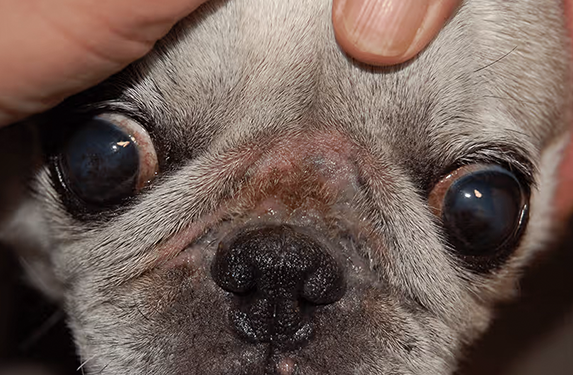
Dr Chiara Noli, Dermatitis of the skin fold on a pug's muzzle (redness, soreness)
Surface pyoderma
Surfacepyoderma affects only the outermost layers of the skin. It typically causes redness, soreness, and itching, sometimes with a greasy appearance due to fluid oozing from the skin. It is most often seen in moist or folded areas of the body. The most common forms are hot spots, often due to self-trauma (triggered by allergies or parasites), and skin fold dermatitis (intertrigo), which develops due to friction between two skin surfaces (common in dogs with pronounced folds). Bacterial overgrowth is common in poorly ventilated areas such as skin folds or paws.

Go to the next picture for illustration of the disorder(s)

Dr Marie-Christine Cadiergues, Folliculitis in a dog/ Numerous pustules with local redness are visible

Dr Chiara Noli, multiple focal areas with hair loss, commonly seen in bacterial skin infections

Dr Chiara Noli, Crusts, often seen in bacterial skin infections

Dr Chiara Noli, Epidermal colarettes, evolution of pustules. Healing in progress
Superficial pyoderma
Superficial pyoderma is deeper into the skin. In addition to redness and itching, it often involves infection within the hair follicles (folliculitis), papules, pustules, crusts, localized hair loss (alopecia), and increased pain and discomfort. We also typically see “epidermal collarettes” where the superficial layers of the skin peel back, due to the bacterial burden within the epidermis with darkened skin. Superficial pyoderma can be seen anywhere on the body.
Folliculitis is a particular form of superficial pyoderma where the infection is concentrated in and around the hair follicles (hence the name!). Bacterial folliculitis in the dog is quite common and is characterized by pustules: whiteheads around the hair follicles. The follicle is usually surrounded by a red and swollen area. As well as being very painful, especially when the affected hairs are touched or moved, the larger pustules can rupture leaving open wounds and, later, scars.


Dr Catherine Laffort, Deep pyoderma in a dog. You can observe bumps and open draining tracts
Deep pyoderma
Deep pyoderma occurs when infection penetrates deep into the skin and sometimes the underlying tissues. You may observe bumps, draining tracts, fissures, erosions, or ulcerative areas, often oozing pus. These lesions are usually itchy and painful.
In addition to staphylococci, deep pyoderma may involve other bacteria such as Pseudomonas, E. coli, or Proteus, which are often harder to treat.

Go to the next picture for illustration of the disorder(s)

Dr Chiara Noli, Follicular cyst in a dog
Dog follicular cysts
Follicular cysts are common but must be distinguished from infections or tumors. A true cyst is a plugged hair follicle filled with sebum or hair material. They are usually harmless but can become secondarily infected.
In rare cases, dogs may develop disseminated follicular cysts, appearing all over the body. These require veterinary assessment to rule out infection or other causes.
What causes skin infections in dogs?
Dog skin infection causes are many and varied, let’s discuss the bacteria causing it and the main causes of infections.
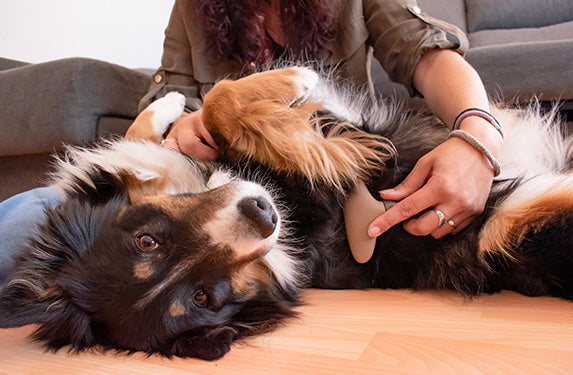
Natural Bacteria, Skin Dysbiosis, and Infections
Dogs naturally have many bacterial species on their skin. When the skin’s health is compromised, opportunistic bacteria can overgrow and cause secondary infections—a condition known as skin dysbiosis.
The main culprit is usually Staphylococcus pseudintermedius, responsible for about 75% of pyodermas. Other bacteria such as Escherichia coli and Pseudomonas aeruginosa account for 10–20% each. Some strains are resistant to antibiotics, such as methicillin-resistant Staphylococcus pseudintermedius and methicillin-resistant Staphylococcus aureus,often due to antibiotic overuse in both humans and animals.
Underlying conditions to skin infections
Bacterial skin infections can often develop due to an underlying condition that causes the skin to become more fragile. Various skin conditions, as well as immunologic or metabolic disorders, can predispose individuals to secondary skin infections. An example of this would be in a dog that suffers from allergic skin disease; allergic skin disease, regardless of what the dog is allergic to, is incredibly itchy that can lead to skin trauma and thus infection. In addition, their skin microbiota is modified and more prone to let bad bacteria overgrow. Certain breeds may be more susceptible to bacterial infections as they are predisposed to certain underlying conditions, for example in the case of breeds predisposed to developing allergies, Labrador Retrievers, Shar Peis, Boxers, Boston Terriers, and Westies are amongst the breeds more likely to be affected.
Is dog bacterial skin infection contagious?
Almost never! Staph and other skin infections in dogs are usually the result of a disruption in that natural microbial barrier and involve the same bacteria that are present on every dog’s skin. So, in most cases, there is no risk of it being passed from dog to dog. The risk of transmission of Staph from a dog to a human is low and is even less likely when good hand hygiene is practiced after treating or touching affected areas. Nonetheless, transmission from dogs to humans can occur in rare cases, particularly in individuals with compromised immune systems such as infants, older adults, or those undergoing chemotherapy. Practicing thorough hand hygiene after contact with affected areas significantly reduces the risk of transmission.
It’s important to remember, though, that even though Staphylococcus bacteria in dogs are similar to those in humans, the possibility of transmitting genes for antibiotic resistance is real.
How is a bacterial skin infection diagnosed?
Your vet will perform a clinical exam and may run tests (e.g., cytology, cultures) to identify the bacteria and determine the best treatment. As infections are often secondary, follow-up may be needed to identify underlying conditions once the skin has healed.
How to treat bacterial skin overgrowth in dogs?
1 : Suppress bacterial growth on, into and below the skin
The skin provides the reservoir of bacteria which are causing the problem. Therefore, suppressing growth - especially of the pathogenic or disease-causing organisms - is important. Approach will depend on the severity of the imbalance. Common approaches involve the use of antiseptic agents such as chlorhexidine* digluconate (as in DOUXO® S3 PYO), except for deep pyodermas. An initial shampoo allows to remove bacteria, crusts, etc. while subsequent use of the mousse allow the ingredient a longer direct skin contact for an optimal performance. For more localized cases, pads allows to bring antiseptic ingredients only where necessary. By knocking down
the bacterial population, we create a “breathing space” for healing to occur.
In case of deep pyoderma or refractory cases, vets will usually prescribe antibiotic medications. In most cases, these will be a long course – generally at least 3-4 weeks for refractory pyoderma and as long as 10 weeks for deep pyoderma. It is therefore essential that the most appropriate antibiotic is chosen, based on cultures, to reduce the further development of resistance, and to effectively treat resistant bacteria.
2: Relieve the pain, itching and inflammation
In many cases, self-trauma or self-injury is part of the problem, due to the pain, itchiness and discomfort of the infection. Products containing Ophytrium® such as DOUXO® S3 PYO (to combine with beneficial effects of chlorhexidine* against bacteria) are beneficial to soothe irritated skin.
3: Restore the natural skin barriers
In case of such disorders, bacteria have damaged or overcome the microbial and mechanical barriers. Reinforcing and restoring these are an important part of treatment. Reducing surface bacteria is an important first step; however, ingredients such as Ophytrium® (included in the DOUXO® S3 PYO formulation) also help support the skin’s mechanical barrier and limit bacterial adhesion and biofilm formation, while restoring the balance of the protective microbial flora for healthy skin.
4: Treat or manage any underlying causes
Skin dysbiosis rarely occurs on its own out of the blue - there is usually a trigger cause, if not an underlying disease process. Identifying that and managing or eliminating it is essential if repeat infections are to be avoided once treatment has finished!
What is the prognosis and is it possible to prevent?
The prognosis for bacterial skin infection is generally good, even if recovery can be long if the infection is deep. Avoidance of
relapse can require long-term management of the underlying cause. If the underlying condition has been controlled, then the secondary or recurrent bacterial infections are reduced.
Prevention will depend on the cause. Long-term management of allergies, up-to-date parasiticide treatment, maintenance of a healthy coat are several measures that may prevent future flare-up.
Learn more about



Find the right product for your pet
TAKE THE QUIZ
Safe for you and your pet

Recommended by veterinarians

Approved by pets and families

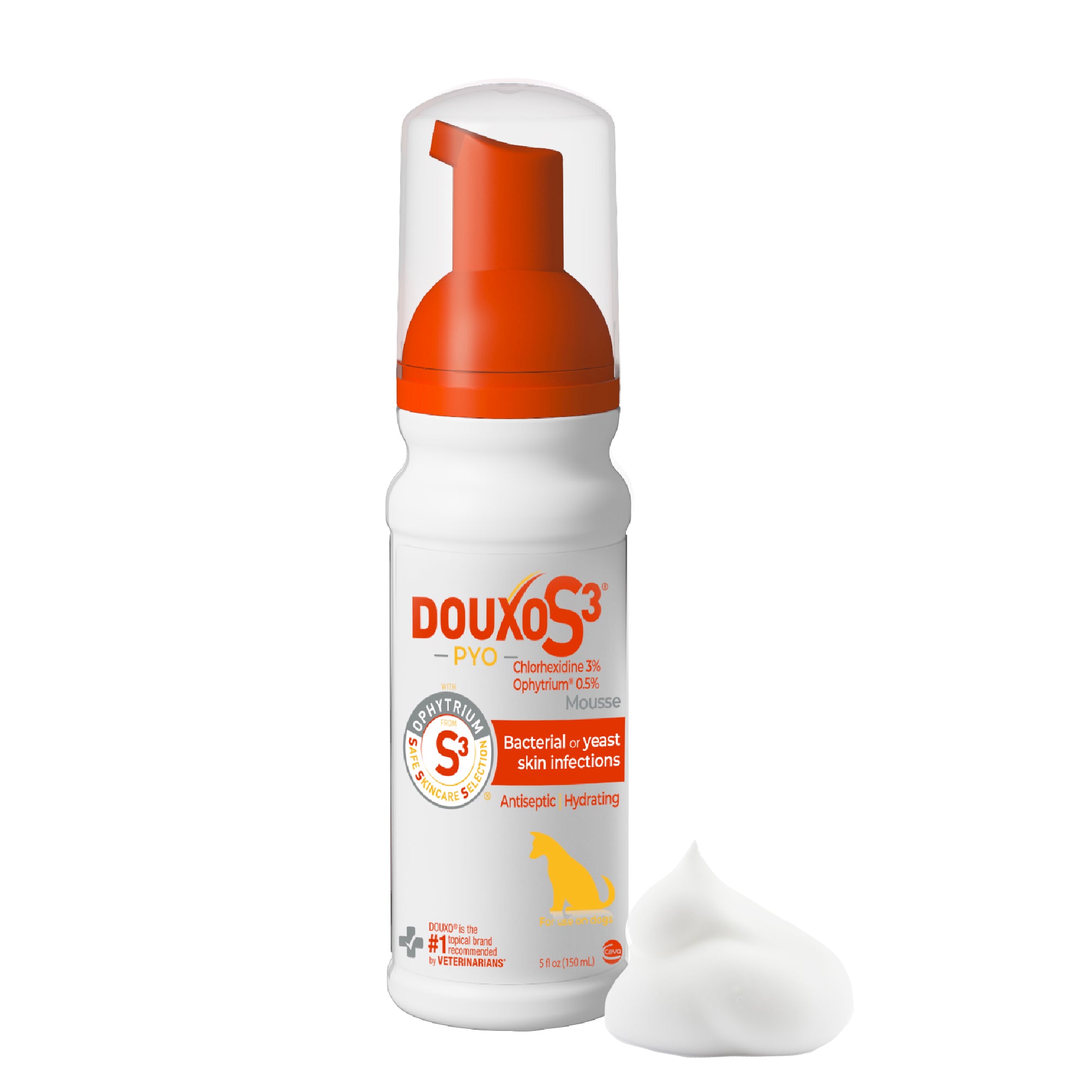
Pyodermas or bacterial skin infections in dogs are uncomfortable but rarely contagious. With the right treatment plan, they can be effectively managed. Ask your vet for the best solution for your dog’s skin issues and learn more about DOUXO® S3 PYO, which provides antiseptic cleansing for
bacterial or yeast skin infections. This complete care routine includes soothing shampoos, a leave-on mousse and pads.
*Chlorhexidine can cause rare but serious allergic reactions in humans. If an allergic reaction occurs, discontinue use and seek immediate medical treatment. Do not use DOUXO® S3 PYO Mousse on cats. Do not use DOUXO® S3 PYO Pads between the toes of cats.